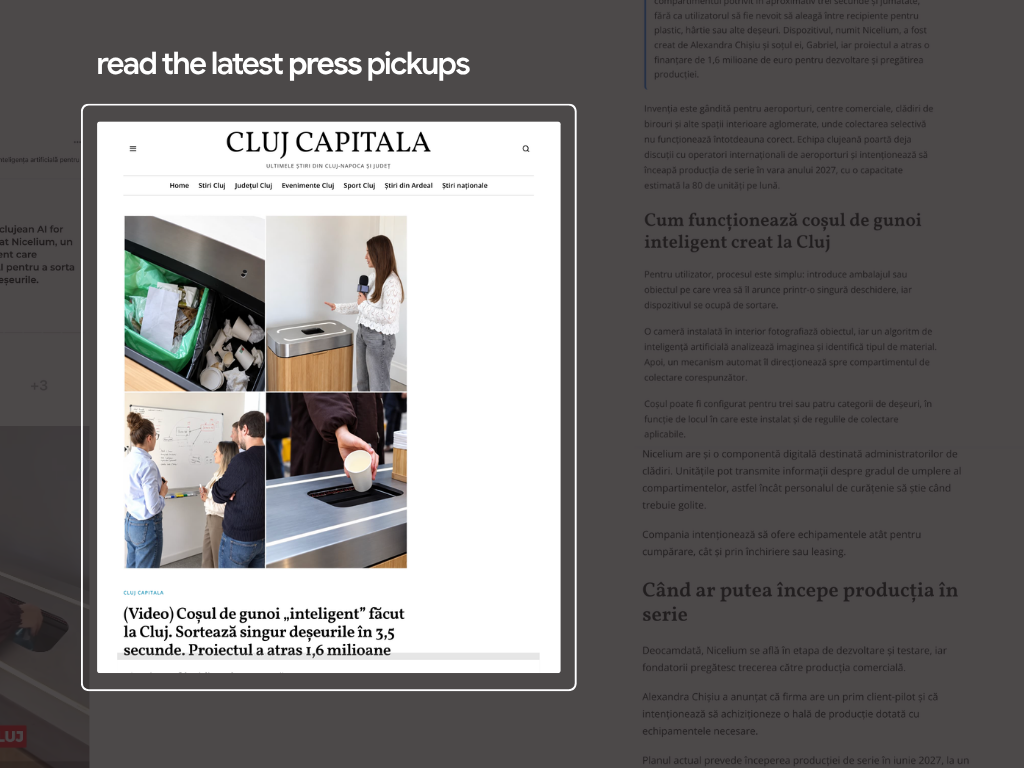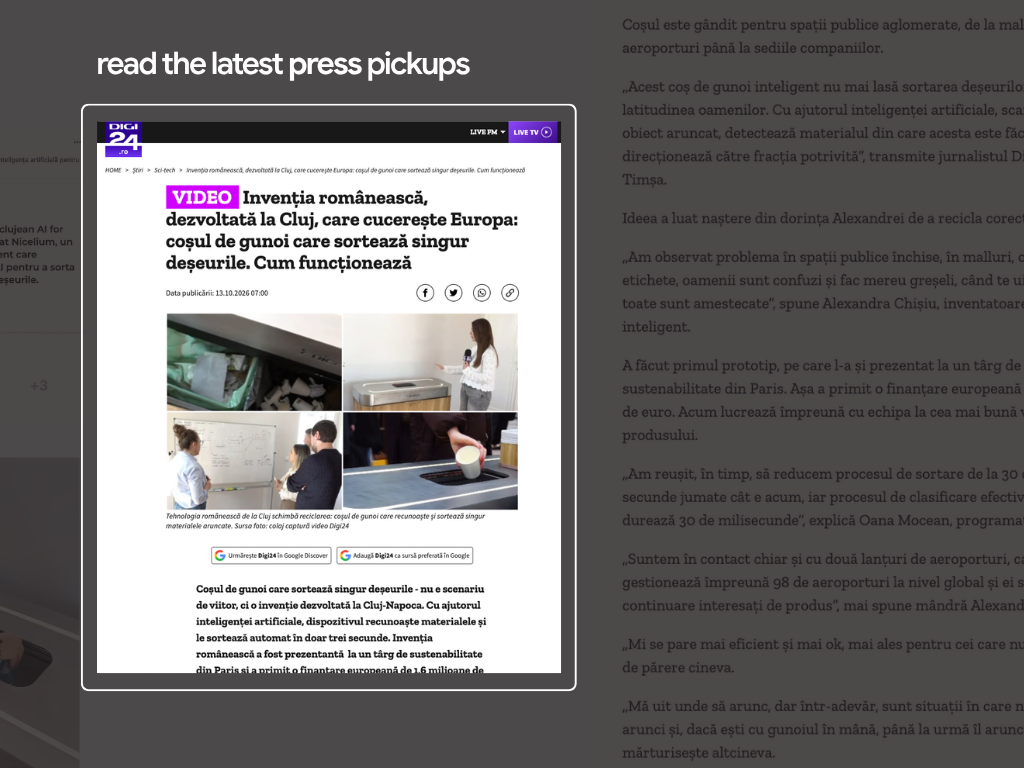




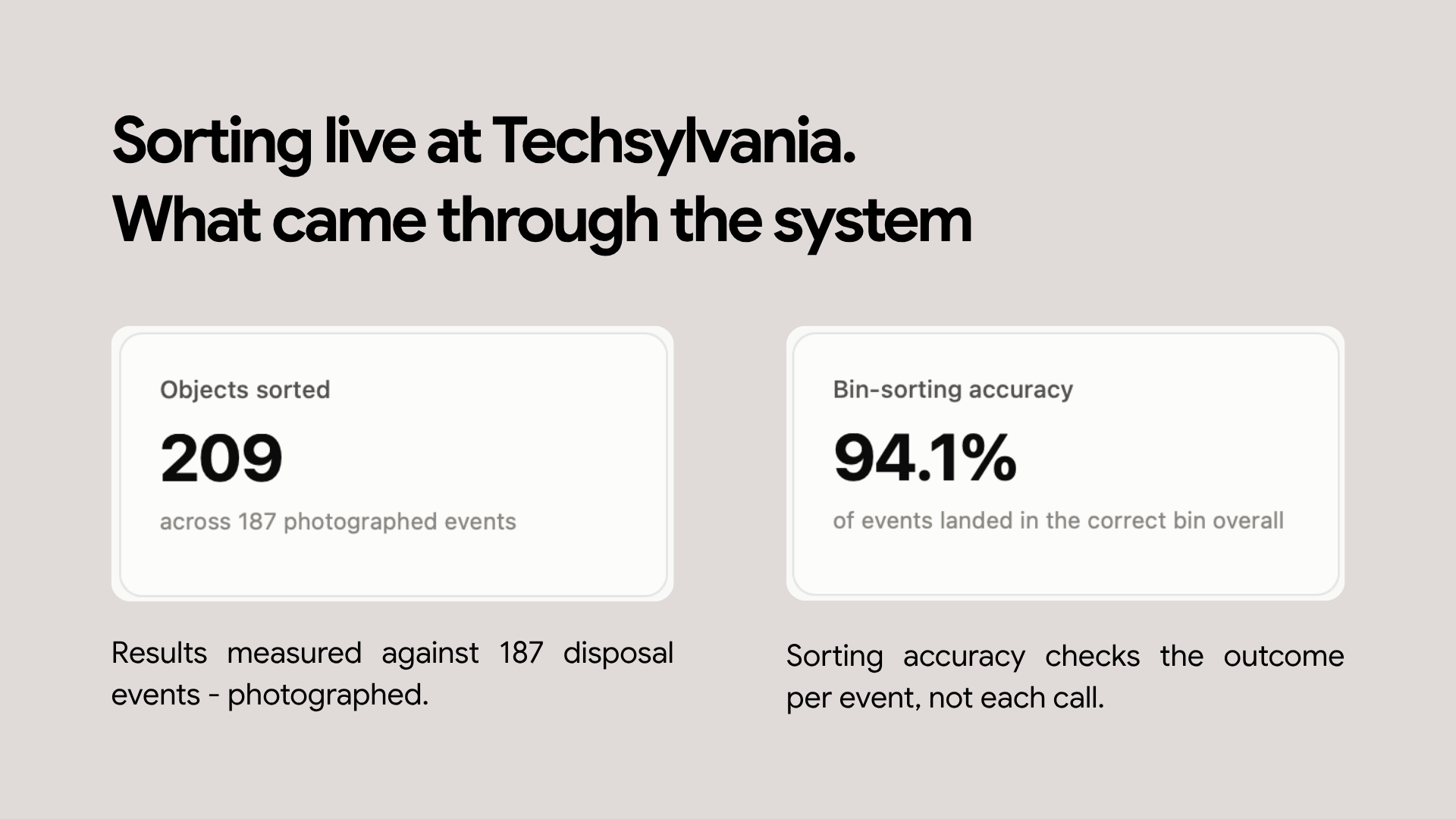
A controlled demonstration phase. Real waste. Real visitors. 209 objects, one system, no shortcuts.
Techsylvania is Romania's gathering point for the region's sharpest thinking. This year, nicelium held two roles there: a stand, and a live, staff-supported disposal interface for the venue itself.
No simulation. No staged props. Visitors disposed of their own waste, at the point of disposal, in real time. Three photos of a staged test item were excluded from the results below to keep the numbers honest.
The people who stopped to watch weren't casual. Sustainability leads. Facility managers. Founders who've spent years inside the compliance grind. The conversation kept circling back to the same place: waste, and what it costs to report on properly.
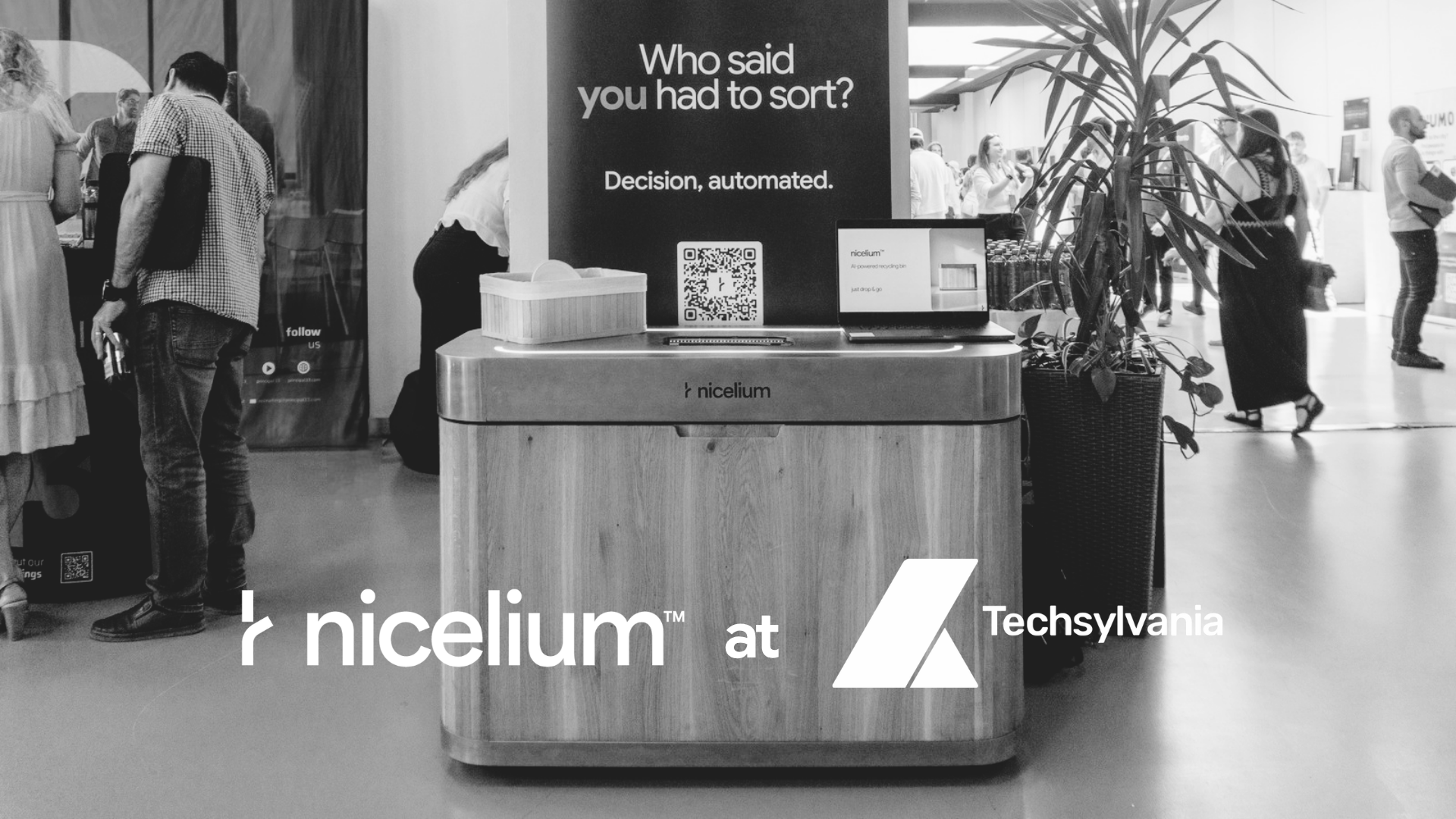


The interface holds up without staff narrating it. Drop the item. The system reads it. That's the whole interaction, and at Techsylvania, that's what people experienced with no one standing over their shoulder to explain it.
For the sustainability leads in the room, the appeal wasn't novelty. It was relief. Relief from having to trust that visitors sorted correctly. Relief for a reporting cycle that currently runs on hope more than data.
The results reflect that phase honestly: a first live read on how the system performs when the waste is real and nobody's coached it.
The next generation arrives in 2027. This is the baseline it has to beat.